A Practical Guide to Headless E-Commerce for Growing Businesses
Discover how headless e commerce can boost your UK business. Our practical guide covers the benefits, costs, and a clear roadmap for implementation.
Dec 21, 2025

Think of your online shop. Is it like an all-in-one TV where the screen and the electronics are fused together? It works, but if you want a better screen, you have to replace the whole thing. That’s how many e-commerce platforms like Shopify or WooCommerce work out of the box.
Headless e-commerce is like separating the two. Your back-end (all the important business logic like products, payments, and stock levels) is the 'media player'. Your front-end (your website, mobile app, or even an interactive kiosk) is the 'screen'. This approach lets you connect any 'screen' you want, giving you total freedom to design the exact customer experience you envision, without being boxed in by templates.
What Is Headless E-Commerce, Explained in Simple Terms?
Let’s stick with that analogy. In a traditional e-commerce setup, the front-end (what your customers see) and the back-end (where you manage products and orders) are tightly bolted together. This is often called a "monolithic" architecture.
This monolithic approach is simple and often a great starting point. But as your business grows, that rigidity can become a major roadblock. Want to launch a custom mobile app, an in-store kiosk, or sell through a new social media channel? You often have to fight your platform's limitations or use clunky plugins that slow everything down. This is a common growing pain for many SMEs.
The Freedom of "Decoupling"
Headless e-commerce flips this around by "decoupling" the front-end from the back-end. The back-end becomes a powerful, central hub for all your commerce functions—inventory, pricing, promotions, and customer data.
The front-end, or the "head," is now completely separate. This is where the magic happens for your brand. It means you can design and build any customer-facing experience you can dream up, using the best technology for the job. You're no longer stuck with pre-made themes. For a more technical breakdown, the article What is Headless Commerce is a great resource for a deeper dive.
The Core Idea: Manage all your e-commerce operations in one place (the back-end) and deliver them anywhere through any interface you choose (the front-end).
This connection is made possible by Application Programming Interfaces (APIs). Think of APIs as messengers that let the front-end and back-end talk to each other securely and efficiently.
To really grasp the difference, here's a quick look at how the two models stack up.
Traditional vs. Headless E-Commerce at a Glance
Feature | Traditional E-Commerce (Monolithic) | Headless E-Commerce |
|---|---|---|
Architecture | Front-end and back-end are tightly coupled. | Front-end and back-end are decoupled. |
Flexibility | Limited to the platform's templates and features. | Near-total design freedom for any channel. |
Customer Experience | Standardised, template-driven user experiences. | Highly customisable and unique brand experiences. |
Development | Simpler initial setup, but customisation is difficult. | More complex setup, but easier to innovate and add new channels. |
Performance | Can be slower due to the all-in-one structure. | Often much faster and optimised for performance. |
Ideal For | Startups and businesses needing a simple, quick solution. | Growing brands focused on omnichannel sales and a unique user experience. |
As you can see, the choice isn't just a technical one; it has a direct impact on your ability to grow and adapt.
What This Means for Your Business
So, what does this tech talk mean in real-world business terms? It means you gain ultimate control over the entire customer journey. You can build lightning-fast websites and slick mobile apps that are perfectly optimised to turn visitors into loyal customers.
This flexibility gives you the power to:
Innovate Faster: Roll out new features or test new sales channels without overhauling your entire system.
Create Unique Brand Experiences: Finally build a storefront that truly reflects your brand's personality, completely free from the constraints of a template.
Reach Customers Everywhere: Sell products seamlessly on websites, mobile apps, social media, voice assistants, and more—all managed from a single back-end.
For any business focused on growth, going headless isn't just a tech upgrade. It's a strategic move that unlocks the agility you need to compete and win on customer experience.
Why Headless E-Commerce Matters for Your Business Growth
Let's move past the jargon and talk about what headless e-commerce actually does for your bottom line. This isn't just about new technology; it’s a strategic shift that solves real problems for growing businesses, especially those trying to stand out in a crowded market.
At its heart, a headless architecture delivers three key outcomes that directly fuel growth: superior site speed, complete brand freedom, and the ability to future-proof your business. These aren’t just nice-to-haves; they are tangible assets that give you a serious competitive edge.
Unleash Blazing-Fast Site Speed
In e-commerce, speed is money. Seriously. A tiny one-second delay in your page load time can cause a 7% drop in conversions. Traditional all-in-one platforms often get bloated and slow, weighed down by countless apps and clunky code. This sluggish performance doesn’t just frustrate visitors—it directly hurts your sales and Google rankings.
A headless approach tackles this problem head-on. Because the front-end is separate, it can be built with modern, lightweight technology designed for one purpose: pure speed. The result is a website that loads almost instantly, keeping impatient customers engaged.
Actionable Takeaway: By decoupling the customer-facing "head" from the heavy back-end, you can deliver a lightning-fast experience that both search engines and users love. A faster site means lower bounce rates, better engagement, and improved visibility in search results.
For small and medium-sized businesses, this performance boost is huge. It lets you compete with larger retailers on user experience—a key differentiator when you can’t always compete on price. You can learn more about how crucial this is from our guide on the impact of page load speeds on SEO and user retention.
Build a Truly Unique Brand Experience
Are you tired of feeling boxed in by pre-made templates? Monolithic platforms often force your brand into their rigid structure, making it incredibly difficult to create a customer journey that’s genuinely unique. This is where headless e-commerce becomes a game-changer for your brand.
With complete control over the front-end, your imagination is the only limit. You can design a bespoke shopping experience from the ground up that perfectly reflects your brand's personality. This freedom allows you to:
Create custom user interfaces that guide customers intuitively through your store.
Integrate rich, interactive content like videos, 3D product models, or quizzes directly into the shopping experience.
Develop a completely unique checkout process optimised for your specific audience to reduce cart abandonment.
This level of customisation lets you tell your brand story in a way that truly connects with customers, turning casual browsers into loyal fans. For instance, a boutique furniture store could use a headless front-end to let customers visualize products in their own room using augmented reality (AR)—something impossible with a standard theme. You can also integrate advanced real-time e-commerce analytics to immediately see how customers interact with these new features.
Future-Proof Your Business for Tomorrow’s Channels
The way people shop is always changing. Yesterday it was mobile apps; today it might be voice assistants like Alexa or even smart mirrors. Traditional platforms struggle to keep up, often needing costly and complex updates to support new channels.
A headless architecture makes your business agile and ready for whatever comes next. Since all your product and customer data lives in a central back-end, you can easily connect new "heads"—or customer touchpoints—as they emerge.
Here’s a real-world example: Imagine you run a subscription service for artisan coffee. With a headless setup, you manage inventory, orders, and customer data in one central place. From that single source, you can simultaneously power:
Your main e-commerce website for desktop and mobile shoppers.
A sleek native mobile app that offers exclusive deals and reordering.
A voice command for Alexa allowing customers to say, "Alexa, reorder my coffee."
When a new channel like a smart fridge with a screen takes off, you don’t have to rebuild your entire system. You simply create a new front-end for it and connect it to your existing back-end. This agility ensures you can meet your customers wherever they are, without massive redevelopment costs.
Understanding the Core Components of Headless
So, you're sold on the business benefits. But what's actually going on under the hood? While it might sound technical, the concept is surprisingly easy to grasp when you break it down. Let's use a restaurant analogy.
Think of your e-commerce platform as the kitchen—it's the engine room handling all the critical jobs like inventory, orders, and customer data. The dining room is your front-end, where customers interact with you, like your website or app. And finally, the APIs are the waiters, carrying information back and forth between the kitchen and the dining room.
Let's take a closer look at each part.
The Back-End: The E-Commerce Engine
The back-end is the powerful, unseen foundation of your entire shop. It’s the central hub where you manage everything that makes your business tick: products, pricing, stock levels, promotions, and customer accounts.
In a headless setup, the back-end's only job is to manage data and processes efficiently. This creates a single source of truth, ensuring that whether a customer is browsing on your website or an in-store kiosk, they’re seeing the exact same, up-to-the-minute product information.
The Front-End: The Customer-Facing Experience
The front-end, or the "head," is every touchpoint where customers interact with your brand. This is where the magic of headless truly shines because you get total creative freedom over the user experience.
Unlike a traditional platform that often boxes you into a template, a headless approach lets you build a completely bespoke storefront. This means you can create a one-of-a-kind design that tells your brand story perfectly. To get a better feel for this, have a look at our guide on the fundamentals of UX/UI design.
A key takeaway for SMEs: Your front-end is no longer just a website. It can be a mobile app, a social media shop, a voice assistant skill, or an interactive display in a physical store. All these "heads" can be powered by the same back-end engine.
APIs: The Messengers Connecting Everything
Application Programming Interfaces (APIs) are the vital link that lets your separate front-end and back-end talk to each other. Think of them as a set of rules for how different software should interact, ensuring data is passed between them securely and instantly.
When a customer clicks "Add to Cart" on your website (the front-end), an API call is sent to your back-end to update the stock count. When the back-end confirms the item is available, it sends a message back via the API to the front-end, confirming the item has been added. It’s a seamless, behind-the-scenes conversation happening in milliseconds.
This flowchart shows how these components work together to fuel your growth.
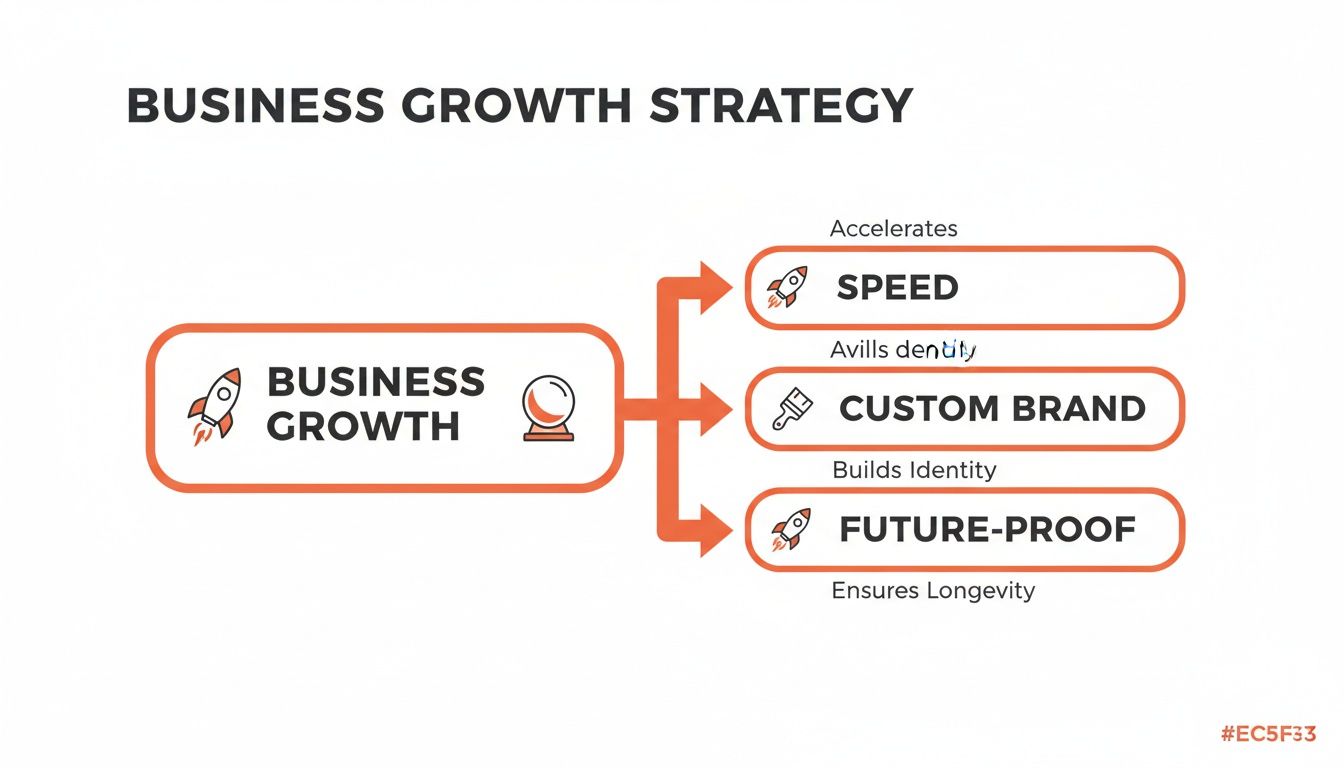
As you can see, the flexibility of headless architecture is what enables superior site speed, a unique brand identity, and the agility to adapt to the future.
The Rise of Composable Commerce
This separation of components is the foundation for a powerful strategy known as composable commerce. Imagine building with LEGO bricks. Instead of being stuck with a pre-packaged set, you get to pick and choose the best brick for each specific job to build exactly what you need.
For instance, maybe the built-in form builder on your e-commerce platform is clunky and restrictive. In a composable world, you can simply unplug that component and integrate a specialized tool using an API.
Actionable Example: Instead of a generic contact form, you could use a tool like Weavely.ai to create interactive surveys. You could embed a dynamic feedback form on your product pages to ask customers what they think of a new collection, gathering valuable insights without interrupting their shopping journey.
This mix-and-match approach allows you to build a flexible, powerful tech stack that is perfectly suited to your business, giving you a huge advantage over competitors stuck with a one-size-fits-all solution.
Of course, theory is one thing. Seeing how headless e-commerce actually works in the real world is where it all clicks. Let's look at a couple of examples of how businesses are using this architecture to see real growth.
These stories show that splitting the front-end from the back-end isn't just a technical move—it's a smart business strategy.
Use Case 1: The B2B Supplier
Imagine a UK-based supplier of specialized office equipment. They handle dozens of corporate clients, each with its own unique product catalog and pre-negotiated prices. A standard, off-the-shelf online shop was never going to work.
The Business Challenge Their old e-commerce platform was a management nightmare. Every time a new corporate client came on board, they had to build a separate, branded ordering portal from scratch. This meant duplicated effort, inconsistent data, and a huge drain on resources.
The Headless Solution They decided to go headless. They built a single, powerful back-end system to manage all products, inventory, and business rules. Then, they created multiple lightweight front-ends—in their case, custom ordering portals for each client.
Every portal was tailored with the client's branding, their specific product list, and unique pricing. But crucially, they were all powered by the same central inventory system, which meant data was always accurate and in sync.
The Tangible ROI: The result? They cut the time it took to launch new client portals by 50%. A process that used to take weeks of development now only takes a few days, letting them onboard new accounts much faster.
Use Case 2: The Personalised Subscription Box
Now for a direct-to-consumer brand: a company selling curated subscription boxes of gourmet coffee. Their whole business is built around personalization and creating a brilliant customer experience.
The Business Challenge Their old, template-based website felt generic and didn't capture the premium feel of their brand. They wanted to give customers an interactive journey—letting them build their own boxes, tweak preferences, and reorder from any device, completely friction-free.
The Headless Solution Going headless gave them the creative freedom they were missing. They built a stunning, fast, and highly interactive website where customers could take a "flavour profile" quiz to get personalised coffee recommendations. The entire experience felt bespoke.
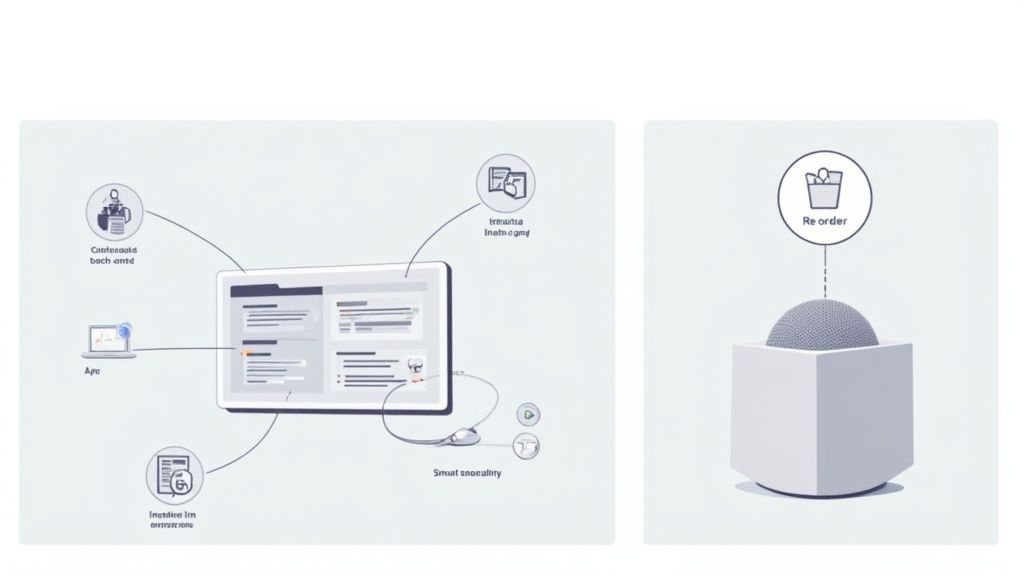
They didn't stop at the website. They also connected their headless back-end to smart home devices. Now, a customer could just say, "Alexa, reorder my usual coffee box," and the order would be processed instantly.
To keep improving, they used a tool like Weavely.ai to embed dynamic surveys right into the customer account area, asking for feedback on recent deliveries. This let them gather insights without interrupting the experience, helping them perfect their product matching.
The Tangible ROI: After launching their new headless setup, the company saw a 35% increase in conversion rates. The ability to offer a true omnichannel experience, from a beautiful website to voice-activated reordering, put them streets ahead of the competition.
These examples make it clear: headless e-commerce is about achieving specific business outcomes. Whether that's streamlining B2B operations or creating unforgettable customer journeys, the flexibility it provides translates directly into a healthier bottom line.
Your Strategic Checklist for Going Headless
Making the leap to headless e-commerce isn't a snap decision. It's a strategic move that needs careful thought, but don't let that put you off. With a clear roadmap, you can make an informed choice that sets your business up for long-term growth.
This checklist is designed to walk you through that process, focusing on your business goals rather than complex code. Let’s figure out if now is the right time to make the switch.
1. Audit Your Current Platform
First, take a hard, honest look at your existing e-commerce setup. Are you constantly hitting roadblocks that slow you down? This is usually the biggest sign that you’ve outgrown your current system.
Ask yourself these practical questions:
Are you fighting with templates? Do you have fantastic design ideas but find your platform’s rigid themes make them impossible to bring to life?
Is site speed a constant issue? Are you losing customers because your pages take an age to load, no matter how much you optimise?
Is adding new channels a headache? Does launching a mobile app or an in-store kiosk feel like you’d have to start completely from scratch?
If you’re nodding along, it’s a strong signal that the limits of your monolithic platform are holding back your growth.
2. Define Your Core Business Goals
Going headless isn't just about new tech; it's about solving specific business problems. What do you actually want to achieve?
Get specific about your main objective. Is it:
Unmatched Speed? Your number one goal is to deliver a lightning-fast user experience to boost SEO rankings and slash bounce rates.
Total Design Freedom? You want to create a completely unique, immersive brand experience that makes you stand out from the competition.
Omnichannel Readiness? Your strategy involves selling across multiple touchpoints—like a website, app, and social media—and you need one unified back-end to manage it all.
Key takeaway for business owners: Be crystal clear on your "why." Knowing your main goal will guide every decision you make, from choosing technology to setting your budget. A clear objective stops you from getting distracted by features you don't really need.
3. Budget Realistically for the Transition
Let's talk about the elephant in the room: cost. Yes, a headless setup often has a higher initial price tag than a ready-made template. But it's crucial to think about the total cost of ownership and the long-term return on your investment.
A realistic budget should cover:
Development Costs: This is for building your custom front-end and integrating your back-end systems.
Platform Fees: You'll need to budget for your e-commerce platform, a headless CMS, and potentially other best-in-class tools.
Ongoing Maintenance: Just like any digital asset, your headless site will need updates and support to keep it running smoothly.
The good news is that you don't have to do it all at once. A phased approach can make the transition more manageable. You could start by launching a new headless storefront for your main website, then add other channels like a mobile app later on. This spreads the cost and lets you start seeing a return much sooner.
4. Choose the Right Technology Partners
You don't have to become a tech expert overnight. The success of your headless project often comes down to the partners you choose—both the technology you select and the agency you work with.
When you're sizing up an agency, look for one that:
Understands SMEs: Find a partner who has experience with businesses your size and gets your unique challenges.
Focuses on Strategy: A great partner will start by asking about your business goals, not just the technical specs.
Provides Clear Communication: They should be able to explain complex ideas in plain English, without hiding behind jargon.
The right partners will feel like an extension of your own team, guiding you through the process. This is especially true when comparing front-end options. For example, understanding the differences between popular platforms is vital, as we explain in our detailed comparison of Webflow vs WordPress.
This strategic approach is gaining momentum. Headless commerce adoption is on the rise as retailers look to improve speed and personalization. Recent data shows a significant number of merchants plan to invest in headless architecture to cut down page load times and launch features faster. You can discover more insights about these headless commerce statistics to see how the market is evolving.
Answering Your Top Headless E‑Commerce Questions
Even with a clear strategy, it's normal to have a few questions before you commit. This is a big decision, after all. To help you feel completely confident, we’ve put together straightforward answers to the most common queries we hear from business owners.
Is Headless E‑Commerce Too Expensive for My Business?
It’s a common worry, but think of it as an investment in a scalable foundation rather than just an upfront cost. While the initial setup can be more than a standard template, the long-term total cost of ownership is often lower.
Why? Because you stop paying for clunky plugins and custom workarounds just to make a traditional platform do what you want. A headless approach lets you build precisely what you need from day one. For ambitious businesses, the ROI from improved conversions, better SEO, and higher customer lifetime value almost always justifies the initial spend.
Do I Need an In-House Development Team?
Not for daily management, no. A well-built headless system actually empowers your marketing team. They can update content, launch campaigns, and manage promotions through a user-friendly Content Management System (CMS) without touching a single line of code.
The technical back-end is separate, so there's no risk of them accidentally 'breaking' the site. For ongoing technical maintenance and building new features, many businesses find it far more cost-effective to partner with a specialist agency on a retainer than to hire a full-time in-house team.
Key Takeaway: Headless empowers non-technical teams by separating content management from the core code. Your marketing team gets the freedom to create, while the technical side remains secure and stable.
How Does Headless E‑Commerce Impact My SEO?
The impact is overwhelmingly positive. One of the most critical Google ranking factors is site speed, and headless websites are built for performance. Because the front-end is decoupled, it can be optimised to load almost instantly, which can dramatically boost your search rankings. According to Google, the probability of a user bouncing increases by 32% as page load time goes from one to three seconds.
You also get complete control over your site's technical SEO. This includes:
Custom URL structures that are clean and keyword-rich.
Full control over metadata for every single page.
Optimised code that search engines can crawl much more efficiently.
You’re freed from the rigid SEO constraints of a traditional platform, giving you a huge competitive edge in search results.
What Is the Difference Between Headless and Composable?
This is a great question, as the two terms are often used together. The easiest way to think of it is as two sides of the same coin.
Headless is the technology that decouples your front-end 'head' from your back-end systems. It’s the architectural foundation that makes everything else possible.
Composable Commerce is the strategic approach that a headless architecture enables. It’s about building your perfect tech stack by picking the best-in-class tools for each job (search, payments, CMS) and 'composing' them together with APIs.
In short, going headless is the essential first step to achieving a flexible, powerful, and future-proof composable setup for your business.
So, What’s Next on Your Headless Journey?
Throughout this guide, we've unpacked how headless e-commerce is a powerful move for ambitious businesses. It boils down to three core advantages that directly impact your bottom line: unmatched site speed, total creative freedom, and future-proof scalability. If there's one thing to take away, it's that this is no longer complex tech reserved for giant corporations; it's an accessible and potent approach for any brand focused on growth.
Feeling ready to explore this further? The journey from curiosity to a real-world solution starts with a few practical actions. Let's focus on a clear, strategic path forward that makes sense for your business.
Your Path Forward: Next Steps
Here are three simple, actionable steps you can take right now to figure out if headless is the right move for your brand:
List Your Current Platform's Pain Points Take an honest look at your existing online store. Are you constantly fighting with templates? Is slow performance costing you sales? Make a list of all the frustrations and limitations that are holding you back. This will be your business case for change.
Schedule a No-Strings-Attached Discovery Call The best way to understand the potential ROI is to talk to an expert. A brief, no-obligation chat can help translate your business goals into a tangible tech roadmap. At Digifox, we specialise in helping businesses like yours navigate these decisions with clarity.
Map Out Your Dream Customer Experience Start thinking bigger. What would you build if you had zero platform restrictions? What kind of customer journey could you create? Use our free 'Headless Readiness' worksheet to begin mapping out your ideal customer journey and long-term vision.
Taking these steps will give you a clear, informed perspective, helping you move confidently toward a solution that actually supports your growth ambitions, rather than getting in the way of them.
